
White paper
The Sustainability Blueprintfor the World’s Premium Brands
Analysis of 100 global brands reveals the widening gap—and what it means for the future of luxury and premium.
100+
Companies
10+
Countries
35+
Parameters

Premium is Being Redefined—Quietly, But Irreversibly
Premium is no longer defined by how a product looks or feels, but by how responsibly it is made, how traceable its supply chain is, how long it lasts, and what it represents beyond ownership.
This is not a sustainability conversation—it is a structural redefinition of value shaping global supply chains and consumer aspiration.

Data-led intelligence for Modern Luxury Brands
The future of luxury Is now transparent.
What theData Reveals
95%
report Scope 1-3 emissions
69%
have SBTi-validated targets
28%
verify deforestation-free sourcing
63%
offer resale or take-back programs
The Widening Gap:The data reveals three distinct maturity tiers
Tier 1
Flag Bearers (38%)
Verified emissions data, science-based targets, accountable governance, and independently validated circular supply chains.
Tier 2
Mid-Trail Brands (30%)
Meaningful progress, but ongoing gaps in supply chain accountability, verification, and circularity adoption.
Tier 3
Compliance-Only Players (32%)
Basic disclosure systems with major gaps in governance and supply chain accountability, increasing regulatory and commercial risk.
10 chapters
What’sInside
Every chapter combines deep industry insight, data-backed analysis, and real-world perspectives shaped by the authors’ decades of experience — connecting numbers, strategy, and the evolving reality of sustainability in premium brands.
01
Chapter 01
Executive Summary
Premium was once defined by craftsmanship and identity. Today, it’s being redefined by responsibility.
Sustainability is no longer adjacent—it is shaping how consumers, investors, and talent define value. The advantage will belong to brands that operationalize it, not just communicate it.

02
Chapter 02
The Global Luxury Landscape
Premium brands don’t just respond to culture—they shape it. What begins here often becomes the standard for the mass market.
This ecosystem now spans far beyond heritage luxury, driven as much by identity and influence as by craftsmanship. Its impact on sustainability is therefore disproportionately large—both culturally and environmentally.

03
Chapter 03
The Premium Paradox: Luxury vs Sustainability
Luxury has always thrived on tension. But this time, the contradiction is structural.
The very attributes that define luxury—rarity, craftsmanship, global sourcing—are now under scrutiny. The question is no longer whether sustainability fits luxury, but whether luxury can evolve without it.

04
Chapter 04
The Consumer Revolution
The definition of desirability is changing. Craftsmanship and quality remain—but responsibility, transparency, and longevity are now part of the equation.
This shift is led by a high-influence consumer segment, setting expectations that reshape the entire market over time.

05
Chapter 05
The State of Sustainable Premium
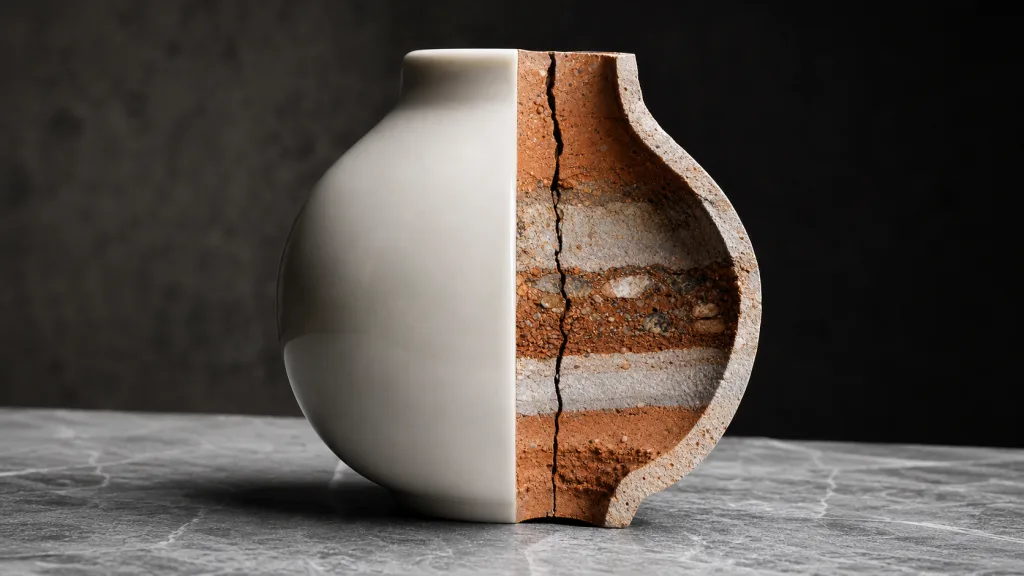
The sector is not uniformly progressing—it is structurally split.
A small group has embedded sustainability into core operations. The majority still treats it as a communication layer. This divide shows up consistently across every dimension of performance.
06
Chapter 06
Who’s Leading and Why
Leaders are not defined by ambition, but by integration.
They embed sustainability into design, sourcing, and decision-making—not as an add-on, but as part of the business model. Others remain surface-level, limiting progress despite similar resources.

07
Chapter 07
Connecting the dots: Major Drivers of Sustainability
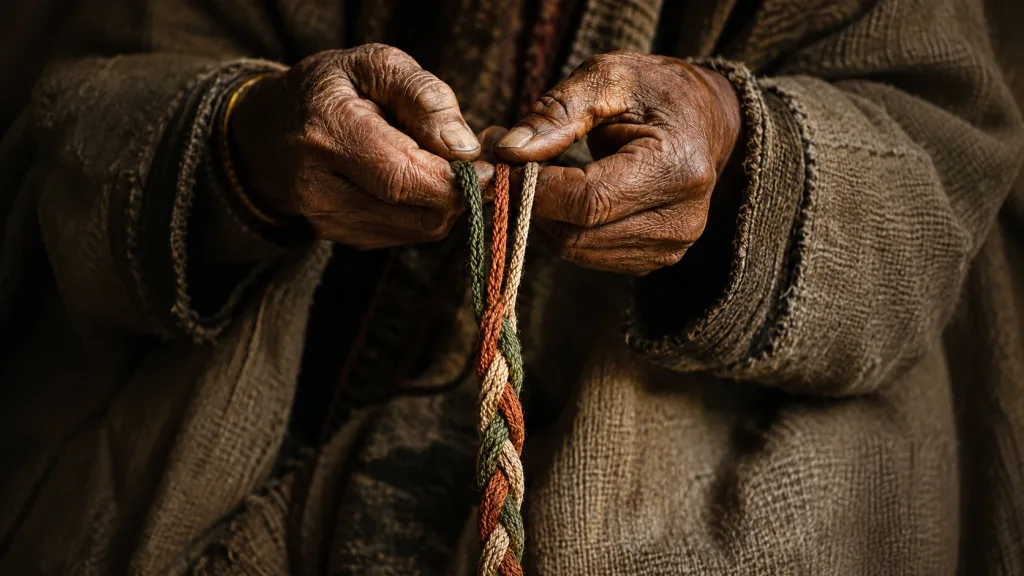
Three forces are converging: shifting consumer values, tightening regulation, and long-term capital expectations. What differentiates brands is not exposure to these forces, but response—whether sustainability is treated as a core driver or a secondary lever.
The brands treating it as a core driver are pulling ahead; the rest are quietly losing ground they may not recover.
08
Chapter 08
The Economics of Sustainability
Sustainability is no longer a brand add-on — it has become a driver of efficiency, resilience, trust, and long-term profitability for premium brands.
The brands embedding sustainability into operations and leadership are gaining competitive advantage, while others risk falling behind in relevance, margin strength, and market value

09
Chapter 09
The Choice Ahead
A defining decade for premium brands, where sustainability shifts from a brand message to a business imperative. This chapter explores the two futures ahead — one shaped by delay and rising risk, the other by leadership, innovation, and long-term value creation.

10
Chapter 10
Conclusion: From Blueprint to Action
Sustainability is no longer a moral narrative—it is an economic one. It now defines resilience, efficiency, and long-term value. The real question is no longer the cost of action—but the cost of inaction.

Who's Leading,and Why
The leaders are not those making the loudest claims, but those embedding sustainability into the core of how products are designed, sourced, governed, and delivered. They treat sustainability as a business architecture decision — shaping operations, supplier relationships, resilience, and long-term value creation — while others still approach it primarily as a reporting or branding exercise.

How the world’s second-largest sportswear brand cut total emissions 20% in two years — by transforming a supply chain it doesn’t own.
20%
Total GHG reduction vs. 2022 baseline
17%
Scope 1 & 2 reduction vs. 2022 baseline
99%
Recycled polyester share of total polyester
100%
Sustainable cotton sourcing (since 2018)
99%
Worker grievances resolved via WOVO platform
42%
SBTi Scope 3 reduction target (2030)

How a prestige beauty company is redesigning packaging from the molecule up — combining advanced recycling, refillable systems, and bio-based innovation.
71%
By weight packaging meeting 5 Rs criteria
5x
Refillable format expansion (vs.2019)
>99%
FSC - certified forest-based fiber
41%
Water withdrawal reduction (high-stress sites)
99.8%
Waste diverted from landfill
60%
SBTi Scope 3 reduction target (per unit revenue, 2030)

How a luxury sneaker brand built a global network of repair ateliers — and proved that extending product life is the ultimate luxury.
24k
Sneakers repaired globally (2023)
8
Forward Stores worldwide
90%
Yatay B CO2 reduction vs. conventional leather
100%
Renewable electricity at owned sites
265
Supplier audits completed (2022 -2024)
70%
SBTi Scope 1 & 2 reduction target (2030)

How a luxury conglomerate partnered with Conservation International to transform one million hectares of farmland — and became the first company to set validated science-based targets for both land and water.
1.1m
Hectares enrolled in regenerative agriculture
105k
Beneficiaries across 8 countries
15%
Total emissions reduction (2024 YoY)
90%
Reduction in SBTi Scope 1 & 2 target ( 5 - year)
21%
Freshwater use reduction target (2030)
12
Consecutive years in S&P DJSI

How a luxury outerwear giant built a full-spectrum carbon accountability system — and proved that transparency drives transformation.
Zero
Scope 2 emissions (market- based)
100%
Renewable electricity at all sites
~10k T
CO2e avoided via material substitution
70%
SBTi Scope 1 & 2 reduction target (2030)
52%
SBTi Scope 3 reduction target (2030)
#1
6th Consecutive Year: DJSI ranking (Textiles & Luxury)

How an outdoor brand built the industry’s deepest commitment to worker dignity — reaching 85,000 workers across its supply chain.
>95%
Products from Fair trade Certified factories
85k+
Workers benefited from Fair Trade program
$37m
Collective funds distributed
93%
Recycled Polyester usage
89%
Recycled nylon usage
84.4%
Preferred certified material sources

How linking executive compensation to sustainability targets turned Sustainability from aspiration into operational discipline.
9/10
Products from recycled / certified materials
86%
Scope 1 & 2 emissions reduction (own sites)
99.7%
Cotton from certified recycled sources
99.3%
Leather from LWG-certified tanneries
500k+
Workers with access to grievance mechanisms
22/28
Vision 2030 goals achieved ahead of schedule

How a century-old Italian shoemaker made leather, its most essential material, its most auditable one.
97.9%
Renewable electricity across all operations
87.7%
Scope 2 market -based emission reduction (2024)
>99%
Tannery supplier turnover from LWG-certified sources, of which 79% Gold or Silver
16.4%
Total market-based GHG reduction year-on-year
-43%
Carbon intensity reduction since 2022
~650
Management employees covered by sustainability-linked annual bonus (STI)

How Japan’s oldest beauty company reinvented packaging manufacturing — and built a consumer collection system that requires no washing, no sorting.
~70%
Plastic reduction (LiquiForm technology)
~70%
GHG reduction (LiquiForm vs. standard)
76%
Packaging switched to sustainable materials
770+
Refillable SKUs across portfolio
89%
Renewable electricity ratio (global operations)
A
CDP Climate Change rating

How a 130-year-old crystal maker turned manufacturing waste into a new product category — cutting resource use by 40% and environmental impact by 34%.
40%
Natural resources saved (ReCreated Crystals)
34%
Environmental footprint reduction
46%
Total GHG emissions reduction since 2019
98%
Water recycling at Wattens facility (polishing)
100%
Renewable electricity at Asian manufacturing
47%
SBTi Scope 1&2 reduction target (2030)
The Themes ThatDefine the Decade

The new definition of premium
Why responsibility, traceability, and longevity now sit alongside craftsmanship as markers of value.

The leadership gap
Why a small group of brands are pulling ahead — and why most are struggling to convert intent into execution.

Regional contrasts that matter
Europe vs. the U.S. vs. Asia — not just ambition, but maturity and readiness.
From storytelling to substance
Where sustainability narratives hold up — and where the data tells a different story.

From compliance to competitive advantage
How sustainability intelligence is becoming a board-level capability, not a reporting exercise.
Written For Decision-Makers
Who This Is For
This blueprint is designed for leaders who influence how aspirational brands are built, governed, and sustained over the long term:
Luxury & premium brand CXOs
Board members & strategy leaders
Sustainability heads
Investors tracking long-term brand value
Anyone shaping the future of aspirational brands
If sustainability sits anywhere on your agenda — this blueprint is written for you.
Meet theCo-authors




White paper
Get YourReport.
The Sustainability Blueprint for the World’s Premium Brands
100+ Companies
10+ Countries
35+ Parameters
10 Chapters